
Power Ten Newsletter - January 2026
/
By Eric Schneider, Fundraising Chair, Friends of Minnesota Men’s Crew
The Minnesota Rowing “Power Ten!” Newsletter strives to keep everyone associated with the U of M Men’s Crew Club informed and connected to the team while also providing insight into the world of collegiate club rowing. To all our alumni, parents, student-athletes, and supporters of the team, Thank You for your commitment to Minnesota Rowing!

2025 King of the Boathouse: Sophomore Thomas Ahlstrom
To add some excitement and internal competition in late November, Coach Armstrong introduced a “King of the Boathouse” contest for the entire men's team. Six different challenges had to be completed in a week with points awarded to placing 1st to 50th, with the overall point-getter earning the title of “King.” Some contests favored the big guys (erging) while some favored smaller guys (pullups and running) with the goal of giving every man a chance to excel at something.
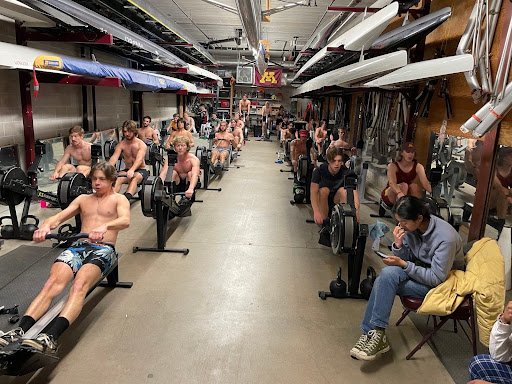
The six tests were:
1:00 erg for max meters
Max pullups in one set
2000 meter bike erg for time (about 3:00)
Whicher Run (named after novice coach Steve - 1.5 miles around the boathouse then up to the top of the hill)
Erg competition: highest watts in 7 seconds divided by body weight
30' erg at rate 20 for most meters
The leaderboard changed every day, but at the end it was sophomore Thomas Ahlstrom winning, with senior Fred Rye in second place and sophomore Will Staples in third place. Impressively, Thomas won two of the six events and was 2nd in another two events. His split for one minute test was 1:17.9 and he did 22 pullups! The sophomore class earned five of the top ten places. Some novices held their own, placing 12th, 14th and 15th.
King of the Boathouse should become a November tradition moving forward. Alumni and parents are welcome to participate as well!

Alumni Spotlight: Matt Rich - Becoming Part of Something Bigger, Something Lasting
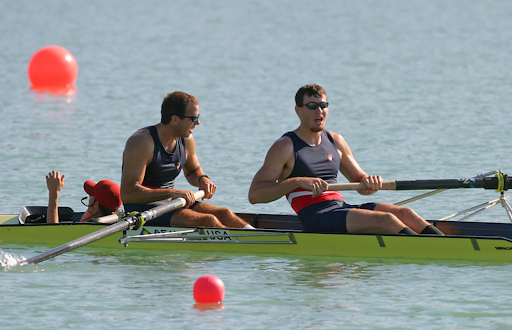
Editor’s Note: This month the Minnesota Rowing “Power Ten” newsletter focuses on World Rowing Championship winner and dedicated U of M Men’s Crew alumni Matt Rich. At the 2003 World Rowing Championships in Milan, Italy, Rich won a gold medal in the men's coxed pair, alongside Dan Beery as stroke and Andrew Kelly as coxswain.
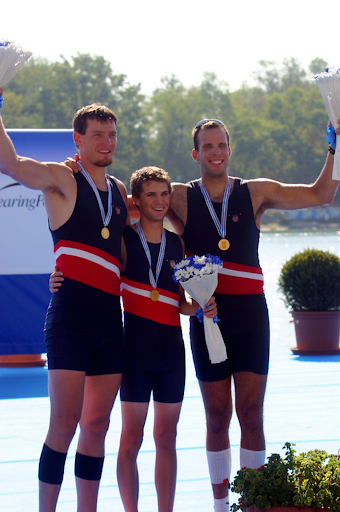
Gold Medal Finish at the 2003 World Rowing Championship, Italy
Matt Rich’s rowing journey at the University of Minnesota spanned from 1993 to 1997, a formative period that shaped both his competitive mindset and his approach to teamwork. He graduated in 1998 with a Bachelor of Science in Chemical Engineering and a minor in Management of Technology, leaving campus equipped with both technical rigor and a deep appreciation for collaborative excellence.
Those years on the water were defined by a culture of intensity and belief, fostered by coaches Tom “Tucker” Altenhofen, Michael Nicholls, and Ed Podneiks, who demanded high standards and instilled confidence that Minnesota could compete with anyone, regardless of size, budget, or reputation.
What Matt remembers most fondly about rowing at the U of M was the team itself. The shared commitment, the competitive edge, and the collective confidence created an environment where preparation mattered and results followed. That mindset crystallized at the 1996 IRA Championships, when Matt recalls sitting on the starting line knowing the team was ready to win. The confidence came not from bravado, but from the simple truth that they had trained harder, prepared better, and trusted one another completely. Those lessons would echo far beyond collegiate rowing.
After graduation, Matt’s life unfolded in ways that reflected that same drive and discipline. He married Heather Kostrack, the team’s varsity lightweight coxswain, in 2000, and together they built a family with three children: Natalie, Charlie, and Henry. Professionally, Matt began his career at Andersen Consulting in 1998, later becoming a partner at Accenture in 2010. In 2014, he moved to PwC, where he has continued as a partner while holding a variety of leadership roles, all while pursuing work he finds deeply meaningful—helping pharmaceutical companies bring life-changing medicines to people around the world.
Rowing’s impact on Matt’s life did not end with college. In 2003, he reached the pinnacle of international competition by winning a World Rowing Championship in Italy, a particularly meaningful achievement given his family’s Italian roots. Reflecting on the sport’s influence, Matt credits rowing with teaching him how to compete with purpose, train with intention, and trust that teamwork consistently produces better outcomes than individual effort alone. Those principles have guided both his professional success and his personal life.
“Rowing taught me how to compete, how to train with purpose, and that teamwork always produces a better result. Those lessons have shaped every chapter of my life."
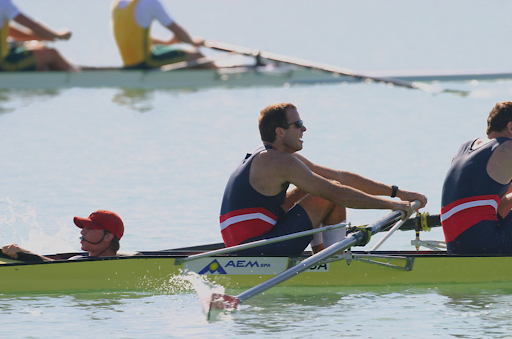
Today, Matt remains closely connected to the rowing community as a proud alumnus and supporter of the program. This spring, he’ll be a familiar face at regattas as his son Charlie competes for Ohio State in their Novice 4+. While Matt jokes that this is his “greatest failure as a father,” he’s quick to add that his loyalty remains firmly with the maroon and gold. Supporting Minnesota Men’s Rowing, he says, is about giving back to a program that gave him so much early in life—experiences that were truly life-changing and worth preserving for future generations.
Asked what message he would send to today’s student-athletes, Matt keeps it characteristically direct: enjoy your team, embrace the travel, and keep perspective. Bad practices and races happen, he notes with a nod to Coach Tucker’s enduring wisdom, but the answer is simple—get back to work. For Matt Rich, rowing was never just about the races won; it was about becoming part of something bigger, something lasting. That legacy continues to shape his life and his commitment to the University of Minnesota Men’s Rowing program.

Midseason Financial Update: Building Stability While Investing in the Future
As the University of Minnesota Men’s Crew reaches the midpoint of the season, it is an appropriate moment to reflect on the team’s financial position and the collective support that continues to sustain and grow the program. To date, combined fundraising efforts between the team and the alumni association total $59,000. While this figure is below last year’s total of $130,000, it is important to note that the current fundraising year still has six months remaining. Historically, the spring and early summer periods provide meaningful opportunities for additional engagement and giving.
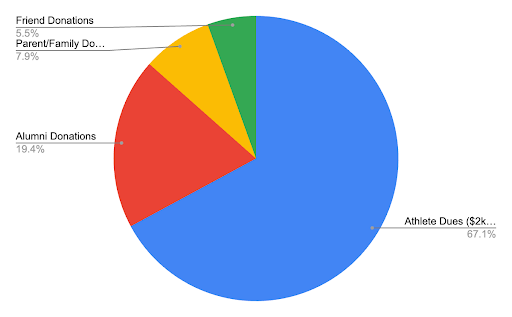
The team remains deeply grateful for the strength of its parent community. Parents have contributed more than $14,000 in donations this year, above and beyond the approximately $2,000 each athlete contributes annually through dues. This level of commitment plays a critical role in ensuring that day-to-day operational needs are met. In addition, the program has benefited from nearly $10,000 in support from donors who are neither alumni nor parents. Many of these individuals are long-time associates of Scott Armstrong, reflecting the respect he has earned within the broader rowing community through years of leadership and service.
Alumni support continues to be the cornerstone of the program’s long-term health. To date, Men’s Crew alumni have contributed nearly $35,000, an essential investment in the team’s future competitiveness and stability. During the 2025–26 season, the alumni association also launched a new endowment campaign aimed at building a sustainable financial foundation. Over time, this endowment has the potential to generate enough annual support to fund the purchase of a new eight-man shell every other year, a transformational milestone for the program.
Thanks to the success of fall fundraising, the team is well positioned to cover its anticipated expenses for the season. At the same time, Coach Armstrong has articulated an ambitious vision for growth, making continued alumni engagement and generosity more important than ever. As winter conditioning concludes and the 2026 race season begins, supporters will find many ways to stay connected to the team, including opportunities to fund rower scholarships, dedicate team equipment via name recognition, and include the program in your estate planning.
If you have questions about supporting the team or would like to explore giving options, please contact Friends of the Minnesota Crew Club Fundraising Director Eric Schneider at 952-465-2042. Thank you for your continued commitment to Minnesota Men’s Rowing!

Coach’s Corner
The team works hard on the water, ergs and weight room nearly every day, but they also work hard to raise money to fund team operations. Every team in the ACRA league pays dues, and ours (almost $2,000 a year) are in line with other highly competitive programs. We are especially challenged here in Minnesota as we have long travel distances to get to competitions. So the rowers and coxswains do extra work to supplement the budget and pay for travel. I know alumni have told me stories of cleaning out lockers and raking yards to pay for equipment and travel. The current generation of Minnesota students are doing the same thing!
Some of the jobs the guys have done through our Rent-a-Rower program are furniture moving, painting, lawn dethatching, cleaning, shoveling, storm windows and shoveling. One job was digging a koi pond. Another took so long the host cooked the rowers dinner. If you are interested in securing a rower or a group of rowers for an upcoming project, please contact Vince Votruba via his email or via cell at (612) 449-7382.
The university will also pay the club for work done. Locker cleanouts and picking up stadiums after games are two of the most popular opportunities. The biggest one is the set-up and takedown of the Rec Sports' inflatable dome in fall and spring. If the team provides 40 people for a full weekend (8 hour both Saturday and Sunday) we will raise $10,000+ for the club. It means giving up practice and a lot of homework time, but it pays for critical travel (spring break and the ACRA National Championships). The U provides free pizza. It is such a team tradition, they (temporarily) named a boat after it - DSD (stands for "Dome Sweet Dome").

President’s Message: Introducing Hayden Maxwell as Men’s Crew President
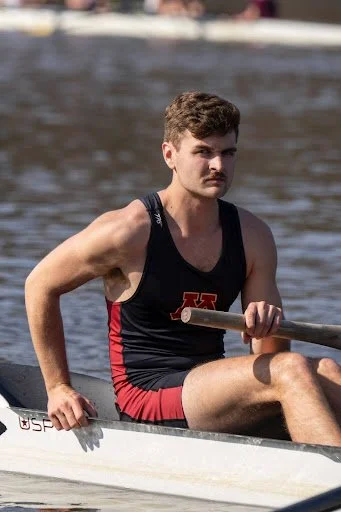
Hello! My name is Hayden Maxwell, and I am excited to serve as the President of Men’s Crew for the remainder of the season. This is my 3rd year with Men’s Crew, and I was previously the Vice President of the club before stepping into this position. Throughout my time on the team, I have met some of my closest friends, and made some great memories. The president has the unique role of shaping the team culture. I want to shape the culture in a way that ensures everyone on the team has the same great experiences I have been lucky enough to have. My goal as president is to streamline the administrative aspects of the club to make sure we can focus on what is important to us, rowing. Despite the change in club leadership, our goal remains the same. Build competitive crews that will medal at ACRAs.
We have fully transitioned to an indoor training schedule until the ice melts on the Mississippi. Our winter training regimen consists of morning lifts on Tuesdays and Thursdays, afternoon erg/tank sessions, Friday Night Fights, and Saturday morning circuits. One of the highlights of our indoor training is the Friday Night Fight workouts. These consist of a scored partner erg workout with the top 3 teams receiving points. The rower that accumulates the most points during these workouts receives a prize later in the spring. However, the prize takes a backseat to the valuable team building and competition that Friday Night Fight workouts offer. Winter training is the hardest, but most important part of our season. It is when we build the fitness and strength needed to win in the spring.
A couple of great training opportunities have been planned to further supplement our winter training. The week before the start of the spring semester, Coach Armstrong will be leading a strength camp with morning lifts and afternoon tank sessions. Our goal is a strong start to the spring semester with a tough, yet rewarding week of training. Spring break will mark the end of winter training. The team will be staying in cabins on Lake Lanier within Don Carter State Park in Georgia. Training in this environment allows everyone to completely immerse themselves in rowing, and is a great time for teammates to bond. During spring break boating assignments will be determined through a series of seat races. Despite the underlying competitive nature of the trip, it is where some of the most valuable team building occurs.
We will kick off our spring on March 28th racing against Purdue hosted at home on the Mississippi (see article below). This is the team’s first opportunity to put the skills we are building with our winter training to the test. The rest of the spring will be busy with regattas almost every weekend after this to include Lubbers Cub in Michigan, the George Washington Invitational in DC, MACRAs in Indiana, and the ACRA National Championship in Tennessee. Early spring races will help the team build racing experience needed to win at ACRAs, but medaling will be a testament to the hard work and dedication we have put in throughout the year.

Share your Time, Talent or Treasure - Stay Close to the Action
One of the most direct ways alumni can support the University of Minnesota Men’s Crew - while also gaining access to the excitement of the race season - is by donating a rower scholarship for the coming race season. A $1,000 scholarship covers half of the annual cost for one athlete and helps ensure that committed rowers can compete regardless of financial circumstances. For many alumni, this is a particularly personal way to give back — directly supporting the student-athletes who carry the program forward and reinforcing the team-first culture that defines Minnesota rowing. Choosing this option also gives you a direct line of communication to a member of the team who will share their appreciation for your generosity via race updates throughout the season.
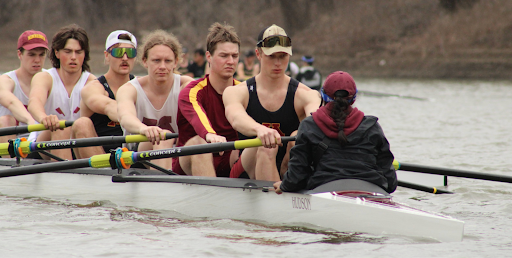
Another meaningful option is to make a donation that will provide the equipment and resources that athletes rely on every day. Alumni may choose to donate key pieces of equipment — such as an oar or an ergometer — with gifts of $1,000. Each donated item is permanently engraved with the donor’s name and graduation year, creating a visible, lasting connection between past and present Gophers. These contributions play a vital role in keeping the team competitive while honoring the legacy of those who helped build the program. For a full list of equipment donations, please visit the Friends’ “Donations” webpage.
For those looking for a more interactive way to stay connected, alumni can also sponsor an individual seat or coxswain position in a Varsity boat for the 2026 race season for $250. Seat sponsors receive real-time race updates from the athlete occupying that seat throughout the season — a unique behind-the-scenes connection to race day and the team’s progress.
Finally, supporting Friends also supports our crew. Friends welcome talents you have to share - Financial acumen? Web or Graphic design? Photo organization? Alumni research and outreach? Any amount of time or talent is welcome - Its a great way to stay close to the action.
Whether through equipment, scholarships, or seat sponsorships, each of these opportunities offers a tangible way to support today’s athletes and remain part of the action on the water.

Including Men’s Crew in Your Legacy
Many alumni have asked how they can support the University of Minnesota Men’s Crew in a way that feels meaningful, personal, and sustainable over the long term. One simple option is to include the program in your estate planning through a bequest. A bequest is a future gift made through your will, trust, or beneficiary designations, and it allows you to support the team without affecting your financial flexibility today. These gifts can take many forms, from a specific dollar amount to a percentage of an estate or designated assets such as stock, retirement accounts, or real property.
Bequests are often appealing because they are flexible and adaptable as life circumstances change. You maintain full access to your assets during your lifetime, and you can update your plans at any time. For many alumni, this approach offers a thoughtful way to express gratitude for the role rowing played in their lives while also helping ensure the long-term strength of the program. In some cases, planned gifts may also reduce estate taxes and ease the financial burden on family members.
Including Men’s Crew in your plans is typically straightforward. Gifts of cash or property are often addressed through a will or trust, while retirement accounts, insurance policies, or investment accounts can usually be updated with a simple beneficiary designation form through your provider. When the time comes, the designated gift is transferred directly to the program, helping support future generations of student-athletes. If you are already reviewing or updating your estate plan, this can be a quiet, meaningful way to leave a lasting impact on a program that has meant so much to so many.
Furthermore, alumni who identify U of M Men’s Crew as a beneficiary receive important alumni benefits, including a full lifetime membership to the Friends of Minnesota Rowing alumni association, two VP passes to the annual team reunion, and optional special recognition in each Annual Report. Please contact the Friends’ Fundraising Chair Eric Schneider for more information.

ACRA 2025 All-Academic Team
The University of Minnesota Men’s Rowing Team is proud to celebrate the academic achievements of its student-athletes who were recognized in May 2025 by the American Collegiate Rowing Association as members of the 2025 ACRA All-Academic Teams. This national recognition honors rowers who have demonstrated exceptional commitment to their studies while competing at a high level athletically. To be eligible, student-athletes must be beyond their freshman year, with Second Team honorees maintaining a cumulative GPA of 3.5 or higher and First Team honorees achieving an outstanding cumulative GPA of 3.85 or higher.
Six University of Minnesota rowers earned First Team All-Academic honors: John Hambleton, Josh Frank, Michio Morizono, Sophie Peterson, Tanay Salunke, and Akansha Kamineni. In addition, Alex Matuska, Jake Molloy, and Sam Holm were recognized as Second Team All-Academic honorees. Collectively, these athletes represent the program’s deep commitment to excellence both in the classroom and on the water.
“Rowing demands a level of discipline and time management that carries far beyond the boathouse,” said former Crew president Akansha Kamineni. “Balancing early mornings, long practices, and travel alongside academics forces you to be intentional with your time, but it’s made possible by a team culture where athletes support one another off the water as much as on it—whether that’s supporting each other in classes, studying together, or helping each other manage demanding schedules.”
The University of Minnesota Men’s Rowing Team congratulates all of its All-Academic honorees and thanks them for representing the program with distinction in every arena.

Rower Spotlight = Dylan Henrikson - “The Quiet Satisfaction of Hard Work”
Dylan Henrikson arrived at the University of Minnesota with a background that suggested discipline, competitiveness, and toughness—but not necessarily rowing. Born in Kansas and raised in Farmington, Minnesota, Dylan grew up with his parents, Amber and Jason Henrikson, and his two younger sisters, Jada and Macie. At Farmington High School, he balanced a demanding athletic and artistic schedule, competing as a varsity wrestler and tennis player while also performing as a percussionist in the wind ensemble and marching band. Wrestling, however, defined much of his early athletic identity, including two trips to the state tournament during his junior and senior years.
That makes Dylan’s first exposure to Minnesota rowing all the more remarkable. At freshman orientation, despite never having rowed competitively, he pulled a 1:16 split on the erg. At the time, he didn’t know what the number meant—only that he had found something unexpected. After stepping away from wrestling, Dylan assumed he was done with year-round sport. Instead, he discovered rowing and, more importantly, a team culture that was welcoming, competitive, and hungry to improve. What stood out most that day was not the erg score, but the people—upperclassmen and fellow freshmen who wanted to compete together.
Now a computer engineering major with plans to graduate in May 2028, Dylan has fully embraced rowing as both a passion and a challenge. While he’s realistic about post-graduation goals like building a career and family, his phone lock screen tells another story: the Olympic rings for Brisbane 2032. Every erg test, whether successful or not, continues to fuel his desire to see how far he can take the sport.
Dylan speaks with deep appreciation for the coaching staff and the environment they’ve built. He credits Coach Scott Armstrong’s passion and vision, Coach Steve’s formative influence during his freshman year, and Coach Michael’s energy and storytelling for making practices meaningful—even on the coldest mornings. That support carried into his summer rowing with MRC, where Dylan raced alongside teammates and alumni, winning races and learning what it means to grow within the sport. One highlight was racing—and winning—in the affectionately named “Cheeseburger Four,” an experience that helped smooth his transition into fall training.
Named to the 2025 Plains All-America Rowing Team, Dylan views recognition not as a finish line but as confirmation that he’s on the right path. His goals are ambitious: a sub-6:10 2K this spring, sub-6:00 by graduation, and an ACRA medal for the team. Yet he remains grounded in why he rows. For Dylan, rowing is about loving the fight—finding joy in improvement, shared effort, and the quiet satisfaction of hard work. It’s a mindset he expects will stay with him long after graduation, wherever the water may be.

Purdue Crew: A Model of Growth, Culture, and Competitive Excellence
As the University of Minnesota Men’s Rowing Team prepares to open the spring racing season, one early test stands out for its significance and symbolism: the annual dual meet against Purdue University Men's Crew. Scheduled for Saturday, March 28 at 9:00 a.m. on the Mississippi River, this marks the second consecutive year that Minnesota and Purdue have agreed to meet early in the season, reflecting a shared belief in purposeful competition and collaboration. What began as a practical scheduling decision has quickly become one of the most compelling early-season matchups in collegiate club rowing.
Purdue has firmly established itself as one of the premier programs in the American Collegiate Rowing Association community. That reputation was reinforced at the 2025 ACRA Championships, where Purdue placed second in the Grand Final of the First Varsity 8 and third in the Grand Final of the Second Varsity 8, a powerful demonstration of both top-end speed and program depth. Those results were no anomaly. Rather, they reflect a program that has steadily built a culture of commitment, development, and belief in its long-term vision.
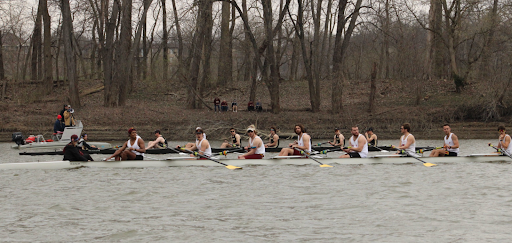
At the center of Purdue’s recent rise is head coach Jack Kellmanson, whose own rowing journey reflects both versatility and resilience. Jack began rowing in 2011 in Jacksonville, Florida, where he competed as a junior sculler in the single and double. He continued his career at the University of Virginia, earning a silver medal in the Freshman 8 at ACRA in 2018 and racing in the Varsity 8 during his junior and senior seasons. Like many athletes of his generation, Jack’s final collegiate years were shaped by the global pandemic, limiting racing opportunities but deepening his appreciation for the sport beyond results alone.
One of the most formative experiences in Jack’s development came in 2019, when he served as a training partner for Swiss world champion single sculler Jeannine Gmelin under coach Robin Dowell. Along with Virginia coach Frank Biller, Dowell inspired Jack to pursue coaching, grounding his approach in technical excellence, athlete development, and thoughtful program leadership. Prior to joining Purdue, Jack coached at the University of Illinois, where he oversaw remarkable growth, including the program’s first-ever ACRA medal in an eight (WN8 bronze in 2024) and its highest team points finish.
At Purdue, Jack has continued that trajectory. Since his arrival, the roster has more than doubled, a testament to both recruiting success and a culture athletes want to be part of. Purdue’s mission emphasizes purposeful self-improvement and rowing as a vehicle for building a growth mindset, aligning closely with the university’s broader Steps to Leaps initiative, which prioritizes student mental health and holistic development. This values-driven approach has resonated deeply within the club rowing community and has translated directly to performance on the water.
For Minnesota, the annual dual meet with Purdue represents more than a race. It is an opportunity to measure progress against a peer program that shares similar values, competitive ambitions, and respect for the role rowing plays in student development. As these two teams line up once again on the Mississippi, alumni can expect a hard-fought, high-quality contest—one that reflects the best of collegiate club rowing and sets the tone for the season ahead.
Thank you to everyone who supports the Minnesota Men’s Crew, especially the parents who staffed the food tent. The team is back in Minneapolis and temperatures are mild, so we are still rowing on the water. We expect to transition to winter operations before Thanksgiving.